
Menopause training for managers is becoming increasingly important as UK employers prepare for changes to workplace equality and menopause support.
The Employment Rights Act 2025 introduced a framework for Gender Equality Action Plans, bringing renewed attention to the practical steps organisations can take to support employees experiencing menopause. Managers play an important role in putting that support into practice, from having sensitive conversations to considering workplace adjustments.
What has changed?
The Employment Rights Act 2025 introduced a new framework for Gender Equality Action Plans.
From April 2026, employers with 250 or more employees have been able to voluntarily produce and publish an action plan alongside their gender pay gap information. Subject to further legislation, these action plans are intended to become mandatory from spring 2027.
Importantly, the plans are not solely about the gender pay gap. They must also address how organisations support employees experiencing menopause.
Government guidance recommends a range of evidence-informed actions that organisations can take. These include reviewing workplace policies and practices, improving flexible working arrangements and training managers to support employees experiencing menopause.
This represents a shift towards organisations being able to demonstrate the practical action they are taking, rather than simply having good intentions around menopause support.
Why are managers so important?
Policies and action plans can provide a framework for support, but it is often a manager who has the day-to-day conversation with an employee.
An employee experiencing menopause symptoms may be dealing with fatigue, sleep disturbance, anxiety, hot flushes, difficulties with concentration or memory, reduced confidence, or a range of other physical, psychological and cognitive symptoms. These can affect people’s experience of work in very different ways.
A manager may therefore find themselves discussing working arrangements, workplace conditions, absence, workload or changes in performance without initially knowing that menopause is contributing to the situation. How that conversation is handled matters.
An employee who feels they will be embarrassed, stereotyped or judged on their performance may be reluctant to explain what they are experiencing. In contrast, an approachable manager who listens, avoids assumptions and understands the support available can help address difficulties before they escalate.
Managers don’t need to be menopause experts
Supporting an employee experiencing menopause does not mean diagnosing symptoms or providing medical advice. Managers need to understand enough about menopause to recognise its potential impact at work, respond appropriately when somebody raises a concern and know where the boundaries of their role lie.

This can include:
- listening sensitively and maintaining appropriate confidentiality
- understanding that every person’s experience of menopause is different
- discussing how symptoms are affecting the individual at work
- considering practical workplace adjustments
- recognising workplace factors that may make symptoms more difficult to manage
- managing absence or performance concerns fairly and without making assumptions
- reviewing support as an employee’s needs change
- knowing when to involve HR, occupational health or other appropriate support.
Sometimes relatively straightforward changes can make working life considerably easier for someone experiencing symptoms. These might include greater flexibility around working hours or breaks, changes to workwear, improved access to ventilation or drinking water, changes to particular duties or consideration of workload and working arrangements.
There is no single solution that will be appropriate for everybody. The conversation with the individual is therefore an important part of getting support right.
Menopause, workplace adjustments and the law
There is no specific piece of UK legislation dealing solely with menopause, and menopause itself is not a protected characteristic under the Equality Act 2010.
However, employers should understand how menopause can interact with existing employment law. Depending on the circumstances, unfair treatment associated with menopause may amount to discrimination where it relates to a protected characteristic such as sex, age or disability.
Employers also have responsibilities for employees’ health, safety and welfare at work. This makes it important to consider whether workplace conditions – including temperature, ventilation, physical demands, working hours, stress and access to facilities – could make menopause symptoms more difficult to manage.
Menopause support should therefore form part of a wider approach to managing people fairly, safely and inclusively.
What should organisations be doing now?
For larger employers, the new Gender Equality Action Plan framework provides an obvious reason to review existing menopause support ahead of the planned move to mandatory action plans in 2027.
But menopause support is not only relevant to organisations with 250 or more employees. Whatever the size of the organisation, it is worth considering whether managers are equipped to handle a menopause-related conversation confidently and appropriately.
Do they understand the potential workplace impact of menopause? Do they know what support or adjustments may be available? Would they know how to respond if symptoms were affecting someone’s attendance or performance? And do employees feel confident that approaching their manager will result in a sensitive and constructive conversation?
A policy can be valuable, but its effectiveness ultimately depends on what happens in practice.
Introducing Menopause Awareness Training for Managers
To help organisations equip managers with the knowledge and practical skills they need, we’ve launched a new Menopause Awareness Training for Managers course.
The online training explores menopause and its potential impact at work before focusing specifically on the manager’s role.
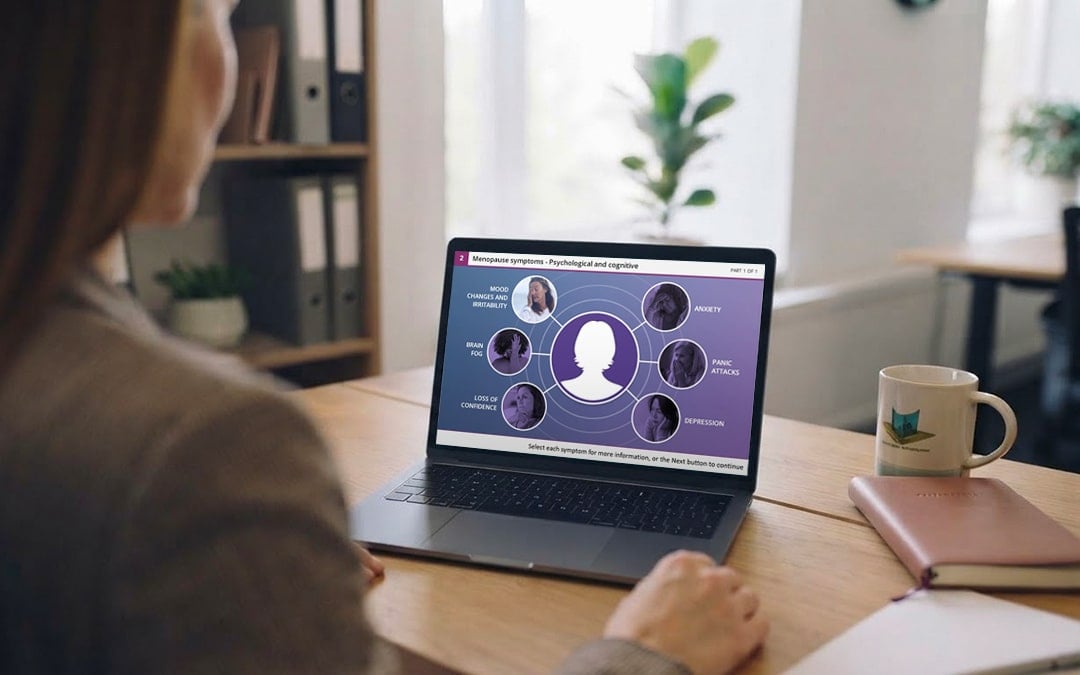
Managers can learn how to approach sensitive conversations, understand barriers that may prevent employees from speaking up, consider workplace support and adjustments, manage concerns around absence and performance fairly, and recognise when further advice from HR, occupational health or other appropriate support may be needed.
The course has also reflects current workplace developments, including the Employment Rights Act 2025 and Gender Equality Action Plan framework.
For organisations looking to build awareness across the wider workforce, our refreshed Menopause Awareness for Employees course complements the Managers training and helps create a shared understanding of menopause throughout the workplace.
Providing managers with the right knowledge won’t give them an answer to every situation – nor should it. What it can give them is the confidence to listen, ask the right questions and help employees access appropriate support when they need it.